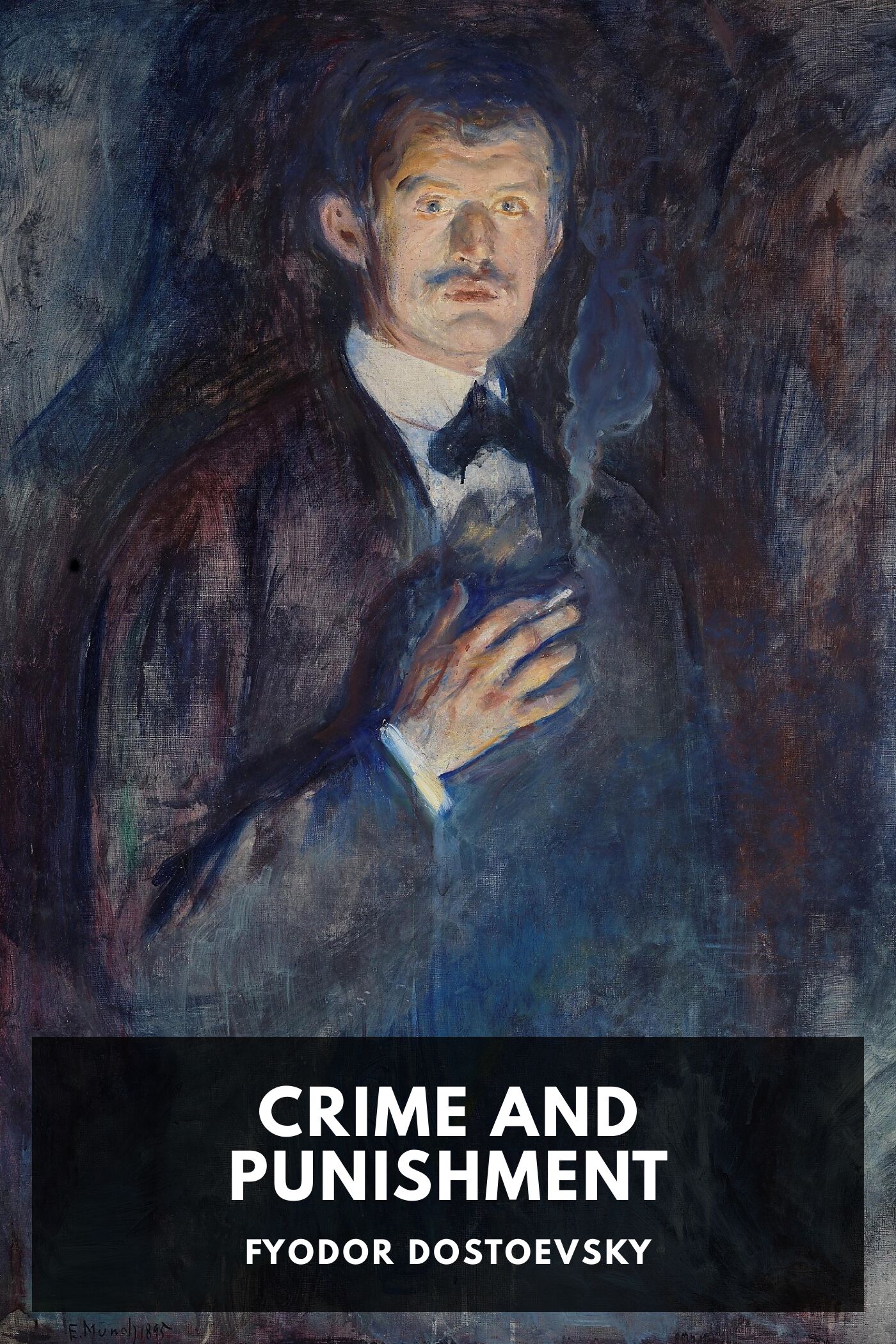
Fyodor Dostoevsky · 1866 · Garnett translation, 1914
Crime and Punishment
Crime and Punishment (1866) follows Rodion Raskolnikov through the days after a murder he has convinced himself is justified, and the guilt that unravels him in St. Petersburg’s slums. The Historian reading companion in IO reader places the novel’s poverty and radical politics in their 1860s Russian context as you read, free in Garnett’s public-domain translation.


Read the opening in Reels
PART I · PARAGRAPH
On an exceptionally hot evening early in July a young man came out of the garret in which he lodged in S. Place and walked slowly, as though in hesitation, towards K. bridge.
On an exceptionally hot evening early in July a young man came out of the garret in which he lodged in S. Place and walked slowly, as though in hesitation, towards K. bridge.
Crime and Punishment · Fyodor Dostoevsky · tr. Constance Garnett
Interactive demo — real text, web replica of the reading view
Read it with a reading companion
Contextualizes the passage in its historical and cultural moment.
Read it with the Historian in IO reader.
Response from the Historian in IO reader · 2026-09-04
This passage reflects the stifling atmosphere of 1860s Saint Petersburg during the era of the Great Reforms, a period defined by rapid urbanization and the rise of radical intellectual movements. Dostoevsky captures the claustrophobic reality of the "proletarianized" intelligentsia, where impoverished students lived in cramped garrets amidst the city's decaying social hierarchy. The suffocating July heat serves as a sensory manifestation of the nihilistic tensions and existential malaise that permeated Russian society following the emancipation of the serfs. By grounding Raskolnikov’s hesitation in the physical squalor of the capital, Dostoevsky highlights the alienation and moral disorientation prevalent among the youth who were increasingly detached from traditional religious and social structures.
The facts
| Length | about 203,500 words · 13,100 sentences |
|---|---|
| In sentence cards | about 873 minutes |
| Difficulty | steady |
| First line | On an exceptionally hot evening early in July a young man came out of the garret in which he lodged in S. Place and walked slowly, as though in hesitation, towards K. bridge. |
| Themes | Part I · Part II · Part III · Part IV · Part V · Part VI · Epilogue |
Is Crime and Punishment hard to read?
It runs long and dense in places, but Garnett's sentences are direct. In sentence cards it comes to roughly 873 minutes across six parts and an epilogue.
Which translation is this?
Constance Garnett's 1914 translation, in the public domain.
How long is Crime and Punishment?
About 203,500 words; roughly 13,100 sentences.
Read Crime and Punishment in IO reader
Colophon
Text: Garnett translation, 1914, from Project Gutenberg (pg:2554). Cover: Standard Ebooks CC0 cover, fyodor-dostoevsky/crime-and-punishment/constance-garnett. Reviewed 2026-09-04.